


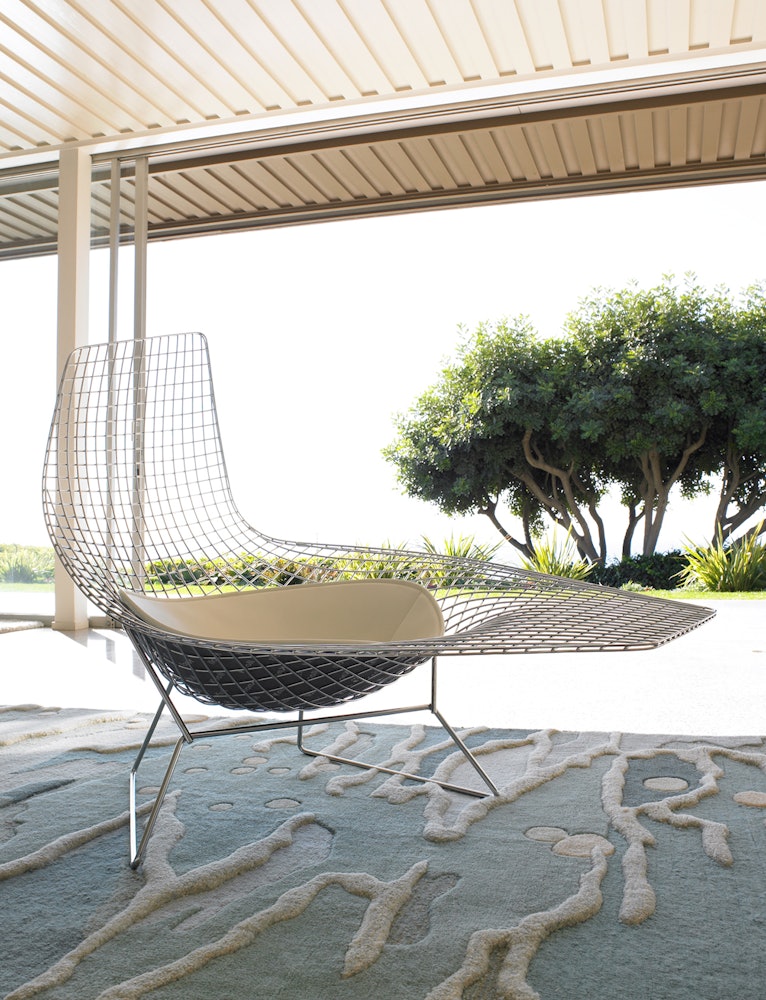
Product Summary
Shipping + Delivery

Easy Returns
Not satisfied? Return items within 30 days. Learn More

Design Concierge
Need help designing your space? Learn more about our complimentary interior design services

Authenticity Guaranteed
This is an original, authenticated product.
Warranty
5-year warranty (terms and conditions may vary)
Gallery
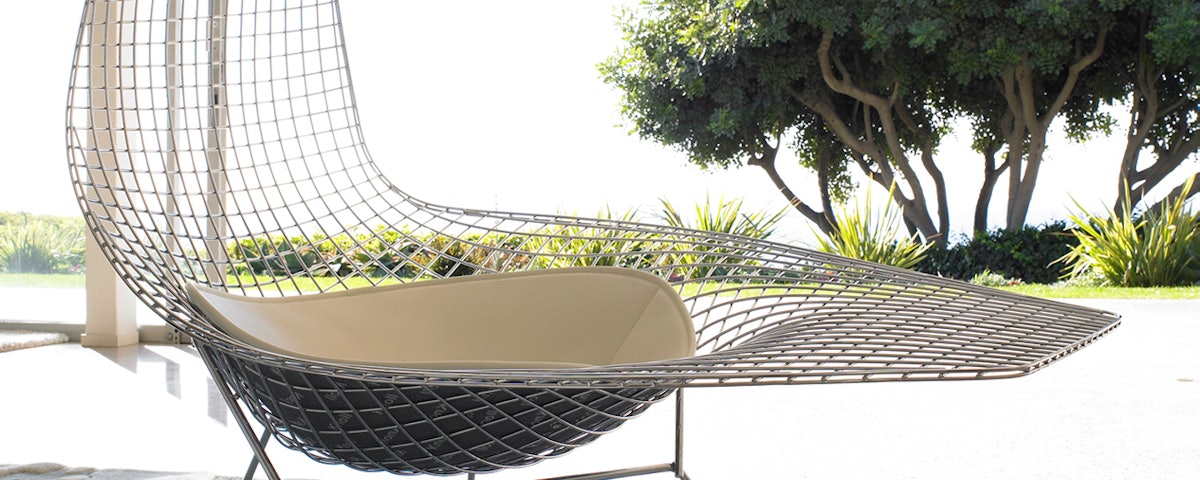
Details
- One of the most iconic contributions to modern furniture design.
- White frame is suitable for outdoor use. Chrome frame is not.
- Available with optional Seat Pad or Full Cover.
- Optional Seat Pad attaches with metal snaps.
- Optional Full Cover attaches with hidden mono-filament and hooks.
- Brand
- Knoll®
- Collection
- Bertoia Collection
- General Dimensions
-
- 40¼" H 52" W 38¼" D
- Assembly
- Comes fully assembled
- Warranty
- 5-year warranty (terms and conditions may vary)
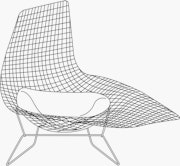
Bertoia Asymmetric Chaise
- Height (in): 40¼
- Width (in): 52
- Depth (in): 38¼
- Weight (lbs): 24
- Seat Height (in): 15
- Welded steel rods
- Polished chrome or bonded Rilsan® finish
- Foam seat pad with Chain Link (100% solution-dyed olefin) fabric, suitable for outdoor use
- Full cover with Bouclé (Nylon 48%, Wool 52%) fabric, not suitable for outdoor use
- Plastic floor glides
- Notification of Filling Contents
Harry Bertoia
Italian artist and furniture designer Harry Bertoia designed the patented Diamond Chair for Knoll in 1952. It was strong yet delicate in appearance, as well as an immediate commercial success. His career began in the 1930s as a student at the Cranbrook Academy of Art, where he re-established the metalworking studio and, as head of that department, taught from 1939 until 1943.
More on Harry Bertoia