


Shipping + Delivery

Easy Returns
Not satisfied? Return items within 30 days. Learn More

Design Concierge
Need help designing your space? Learn more about our complimentary interior design services

Authenticity Guaranteed
This is an original, authenticated product.

For the Accessible Home
Supports customers with mobility needs
Warranty
5-year warranty
Terms and conditions apply. Learn more

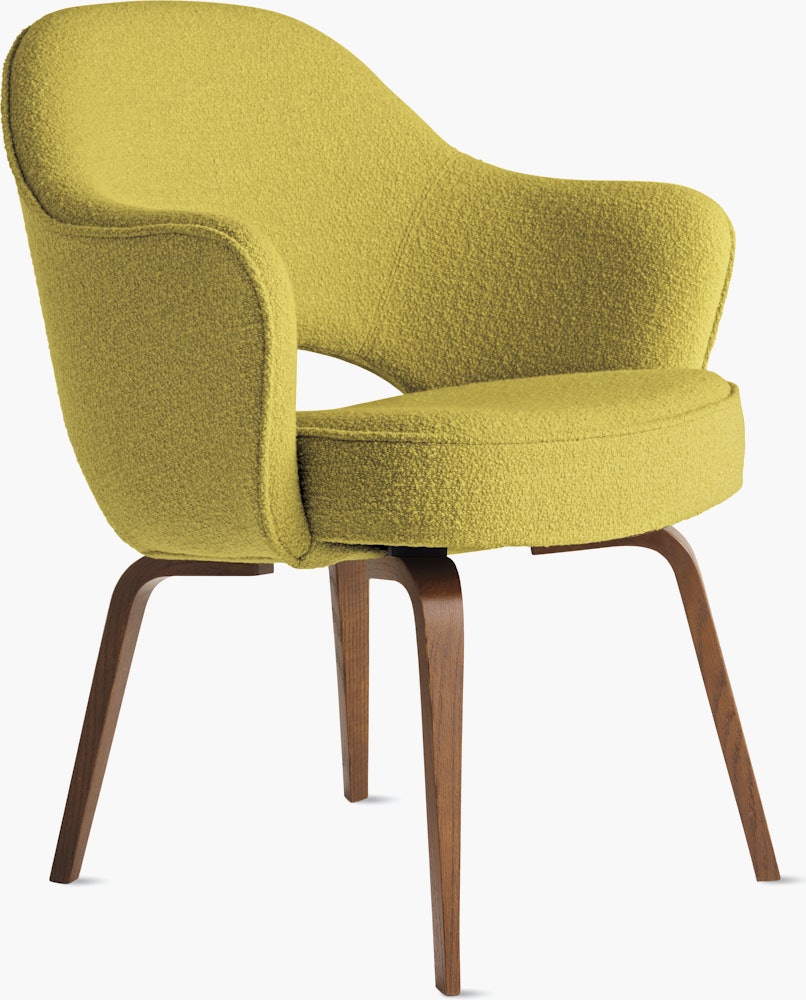
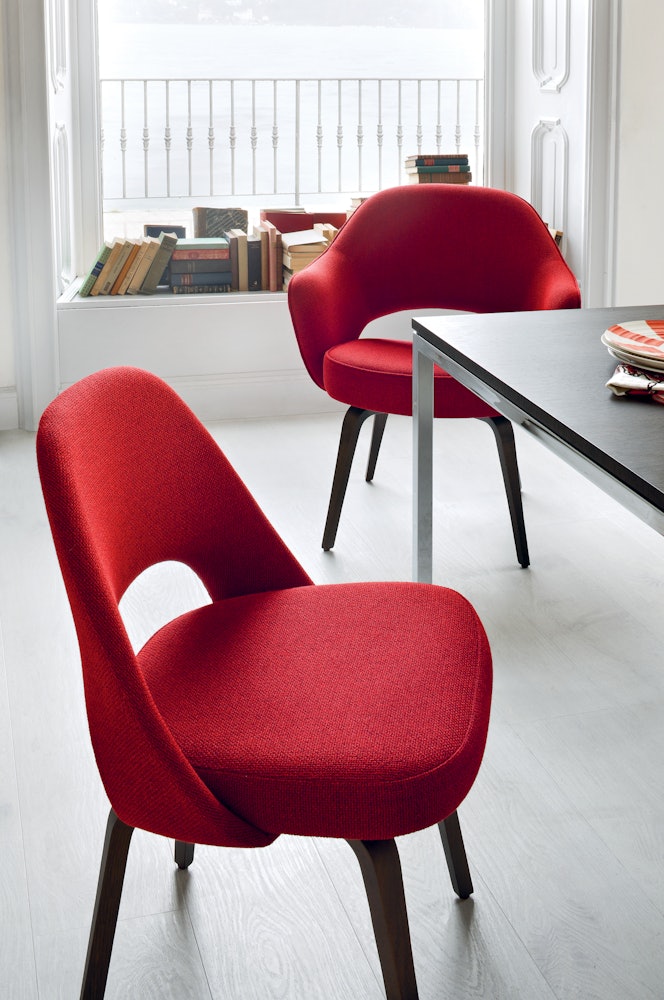
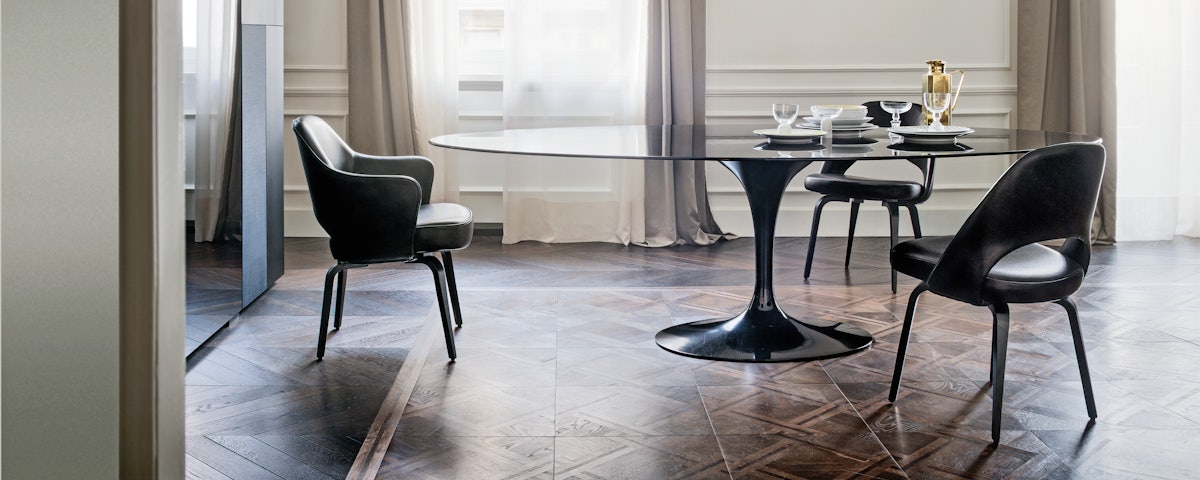
Saarinen Executive Armchair
You May Also Need
Item Number:100193331
You may also like




Gallery
Details
- Intertek Clean Air Certified for its use of low-emitting products.
- Bent wood or tubular steel legs.
- Fabric or leather upholstery.
- Brand
- Knoll®
- Collection
- Saarinen Executive Collection
- General Dimensions
-
- 31½" H 26" W 24¾" D
- Product Weight
- 18 lbs
- Assembly
- Comes fully assembled
- Warranty
-
5-year warranty
Terms and conditions apply. Learn more

Armchair - Wood Legs
- Height (in): 31½
- Width (in): 26
- Depth (in): 24¾
- Weight (lbs): 18
- Seat Height (in): 18
- Arm Height (in): 25
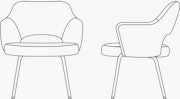
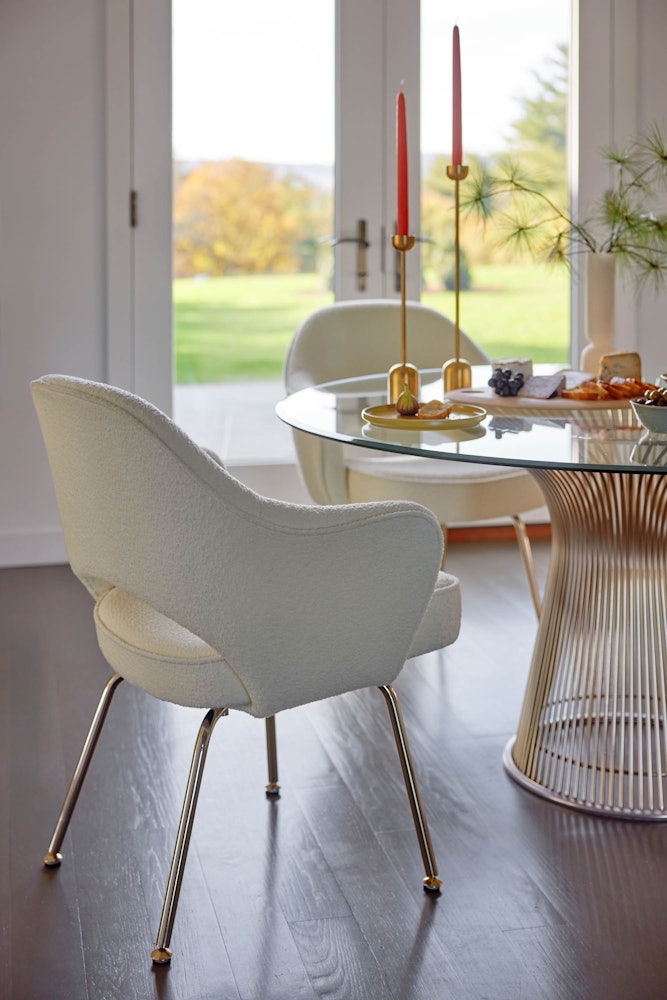
Armchair - Metal Legs
- Height (in): 31½
- Width (in): 26
- Depth (in): 24¾
- Weight (lbs): 19
- Seat Height (in): 18
- Arm Height (in): 25
- Molded reinforced polyurethane shell
- Contoured plywood seat
- Steel leg base
- Solid steam-bent wood legs or seamless tubular steel legs with chromed finish
- Fabric, suede, or leather upholstery
- Notification of Filling Contents

Eero Saarinen
“The purpose of architecture is to shelter and enhance man’s life on earth and to fulfill his belief in the nobility of his existence,” said Eero Saarinen in 1959. Saarinen’s architectural legacy communicates this sentiment of giddy potential and unfettered optimism in post-war America seen in iconic projects like the Gateway Arch in St. Louis and in his sculptural furniture designed for Knoll.
More on Eero Saarinen