Powerhouse
Though interior designer Everick Brown today boasts clients throughout the United States and abroad, his career in the design industry first stopped before it ever started.
“My mother is a fashion designer, but she raised me as a left-brained, academic child not to be creative,” he explains with a laugh. “And, in fact, she said, ‘You’re not talented enough to be creative!’”


But after a fruitful career as a retail executive and fashion merchant, Brown – at the encouragement of a close friend – ultimately decided to instead pursue his passion, blending his field experience with additional study of color and textures in Italy before eventually launching his current firm, Everick Brown Design, in 2009.
Brown’s latest project is a redesign of the Cornell Inn’s reception area and lounge, an effort executed in collaboration with The Kaleidoscope Project – a designer showhouse venture amplifying the industry’s leading BIPOC designers by tapping them to rejuvenate each of the inn’s 21 rooms. Brown’s lounge, which he dubbed the Kutana Room – a Swahili word for “meeting” – borrows Japanese and New England influences to inspire connection and interaction through his signature “modern classic” lens.
Here Brown shares his inspirations for the Kutana Room, reveals his perspectives on diversity within the design industry, and explains how he manifested the Kaleidoscope Project’s design ethos.
To tour Brown’s Kutana Room, visit the Kaleidoscope Project Showhouse in Lenox, MA until June 6.
Why the design industry needs the Kaleidoscope Project
Kaleidoscope is a first of its kind, and we've seen its kind start to show up in the last year. It was a concept that made it possible for people of all backgrounds – in particular people of color – to partake in what's known as a “showhouse.”
The Kaleidoscope Project has empowered people of color to exhibit their designs and show how similar and dissimilar we are to the rest of the industry. Kaleidoscope in and of itself means multi, different, if you will. Once you see my floor plan, you’ll see I was inspired by a kaleidoscope in general.

Design that inspires me
I initially had designed the lounge to have love seats and sofas. But in order to be flexible, if we wanted to use the space for a different function, I went with all chairs.
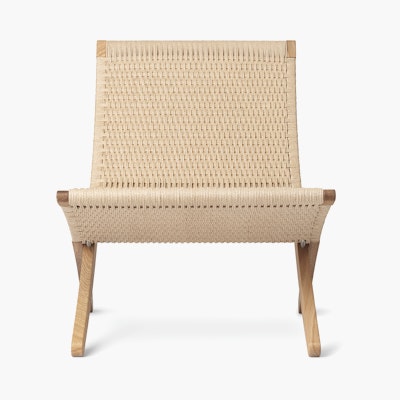
When I turned to partner with Design Within Reach, we looked at this modern Lína Swivel Chair. It was important for comfort as well as functionality that it swiveled. I love an armchair that swivels juxtaposed with a slipper chair, which is anchored by a round rug, as well as leather juxtaposed with velvet or a different texture. It begins to build that environment that starts to look like a kaleidoscope.
“When you walk in a room, my goal is always that you notice one thing, but you start to notice other things. You synthesize the different design elements to come out at different times; they suddenly come out like music. I’m always looking for a crescendo and then a relief.” — Everick Brown

How I manifest rest, rejuvenation, and reflection
If you think about how I describe the reception, which is “transition” or “buffer,” it’s really to cleanse the spirit as you enter the inn. I use a soothing, relaxing color called Puritan Gray juxtaposed with Japanese wallpaper with cherry blossoms. That leads into the lounge, where we used Revere Pewter that integrates with Puritan Gray – warm and cool in a way that you've not seen. It was to bring this idea of transition into this meeting place – the lounge – which is all about relaxing and rejuvenating.
On empowering diversity in design
I would implore the industry to remain open. When you create an orchestra, you have your woodwinds, brass, percussion, strings, Why is it that, when we come to our industry, it becomes very homogenous? We need to stop and understand how important it is to bring the different perspectives into the industry.
As for young people of color coming into the industry: Come in with your talent and with your voice. Don't be afraid to share. As long as you approach it by trying to share, and partake as a part of the team, it should come off in a great way.
“Design is about solving problems, as opposed to about making things beautiful, if you will. Ultimately, we do make things beautiful, but, initially, what I do is solve problems or create ideas that you may not have thought about on your own.” — Everick Brown