




Shipping + Delivery

Easy Returns
Not satisfied? Return items within 30 days. Learn More

Design Concierge
Need help designing your space? Learn more about our complimentary interior design services

Authenticity Guaranteed
This is an original, authenticated product.
Warranty
5-year warranty
Terms and conditions apply. Learn more

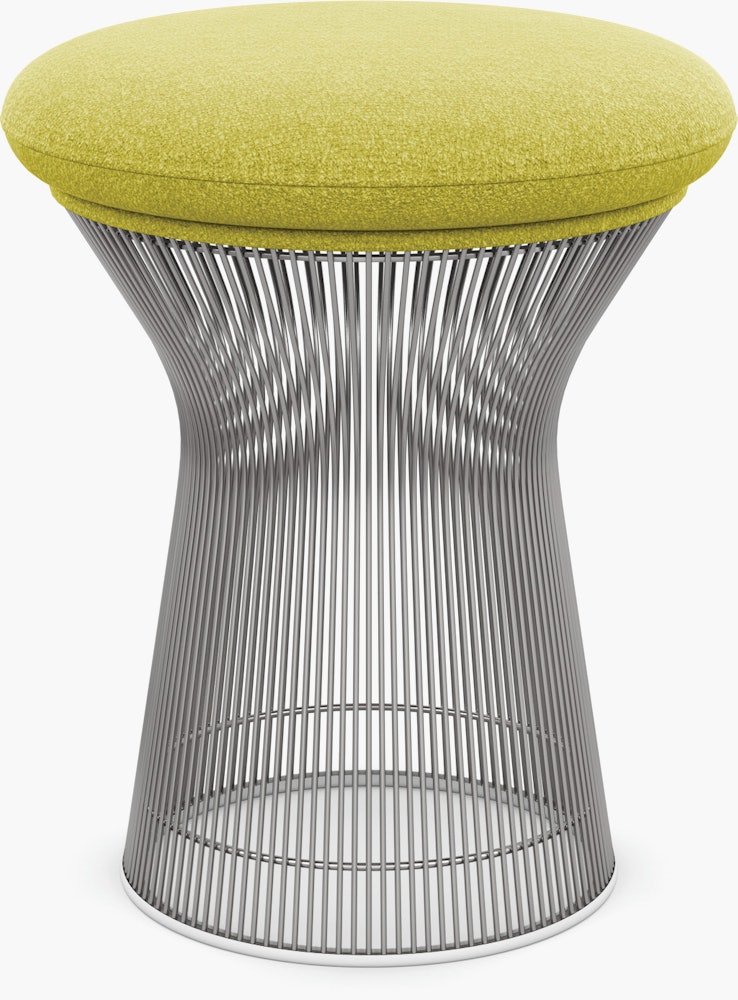
Platner Stool
Details
- Airy steel wire rod construction.
- Fabric or leather upholstery.
- Plastic ring for protecting floors.
- Greenguard Indoor Air Quality Certified for low-emitting products.
- Brand
- Knoll®
- Collection
- Platner Collection
- General Dimensions
-
- 22¾" H 15¼" W 15¼" D 15¼" DIA
- Product Weight
- 12 lbs
- Assembly
- Comes fully assembled
- Warranty
-
5-year warranty
Terms and conditions apply. Learn more
Platner Stool
- Height (in): 22¾
- Width (in): 15¼
- Depth (in): 15¼
- Diameter (in): 15¼
- Seat Height (in): 22¾
- Weight (lbs): 12
- Nickel-plated steel wire rod base with clear lacquer finish
- Molded latex foam cushion
- Plastic extrusion ring on base
- KnollTextiles Classic Bouclé (52% wool, 48% nylon) fabric upholstery
- KnollTextiles Velvet (54% cotton, 46% mohair) fabric upholstery
- Spinneybeck® Volo full-grain semi-aniline leather upholstery
- Notification of Filling Contents
Warren Platner
Of the furniture and interior designers who began to make their talents visible in the 1960s, Warren Platner was among the less flamboyant. Nevertheless, he earned for himself an international reputation for elegant understatement, and the steel wire furniture he designed for Knoll has become an icon of ’60s modernism.
More on Warren Platner